

The story of the People's Grocery Men
Discover the powerful and tragic history of Thomas Moss, Calvin McDowell, and William Stewart, whose lives and deaths fueled a national fight for justice. This is a story of entrepreneurship, injustice, and the birth of a civil rights movement.

Thomas Moss: A pillar of the community
Thomas Moss was a successful Black businessman and a U.S. postal employee in Memphis, Tennessee. In 1889, he became a principal owner and president of the People's Grocery, located in the vibrant neighborhood known as "The Curve," near what is now Mississippi Boulevard and Walker Avenue. The store quickly thrived, becoming a beacon of Black entrepreneurship and a vital community hub.

The People's Grocery: A symbol of success
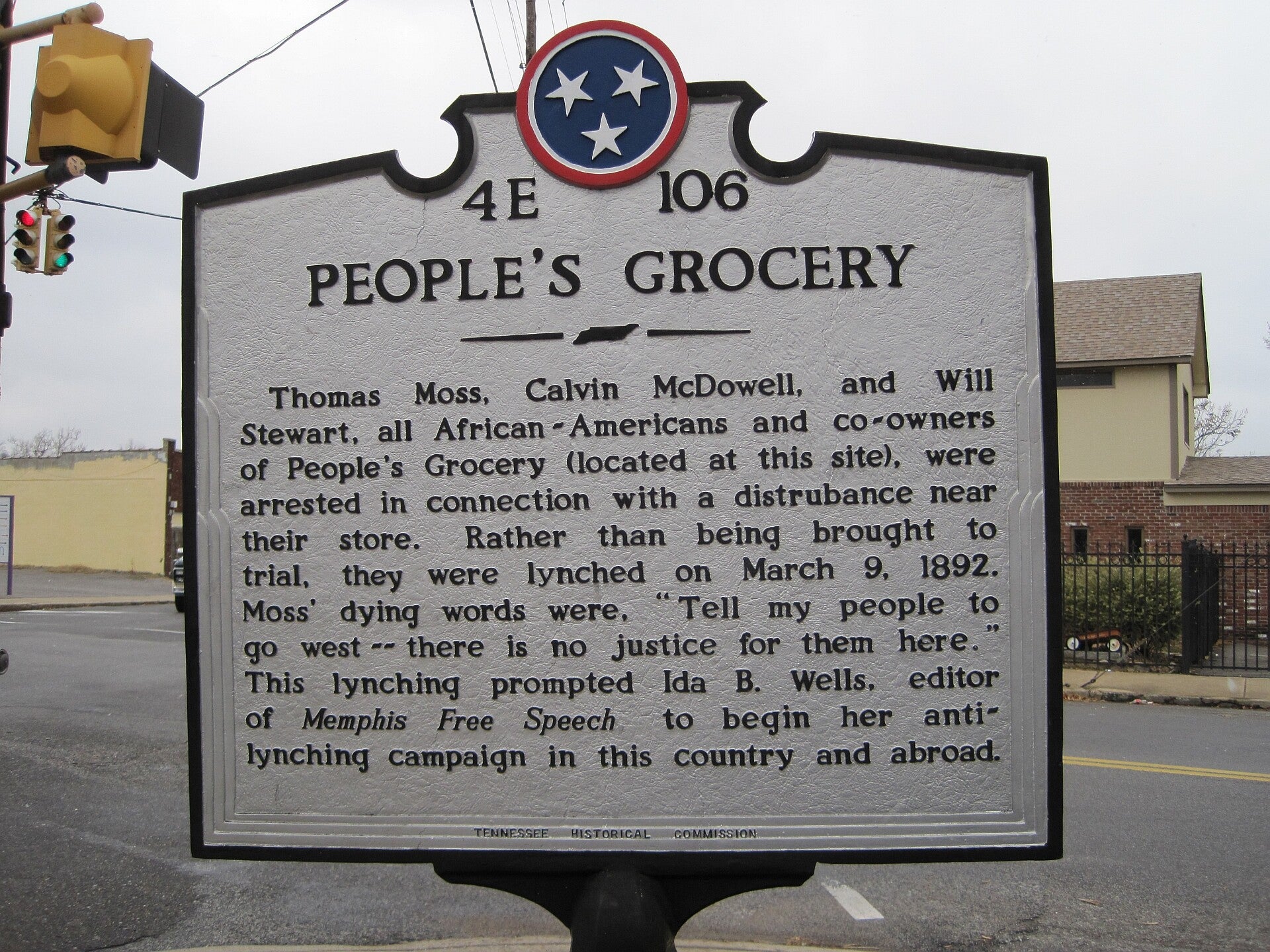
The People's Grocery, co-owned by Thomas Moss, Calvin McDowell, and William Stewart, quickly flourished, creating a thriving business in the heart of the Black community. Calvin McDowell managed the store and was a respected member of the community, working closely with Moss and Stewart. William Stewart, another co-owner, served as a clerk and was a devoted family man and an established figure in Memphis. Their success, however, drew the ire of a nearby white-owned grocery store, setting the stage for tragic events.
A confrontation and a tragic injustice
On March 2, 1892, a confrontation erupted near the People's Grocery involving both Black and white residents. Tensions escalated, leading to the arrest of Moss, McDowell, Stewart, and numerous other Black men. Just a week later, on March 9, 1892, a large, "masked" white mob stormed the jail. They seized the three men, brutally beating and shooting them to death in a railroad yard outside Memphis. Despite an investigation, no one was ever held accountable for these horrific murders, underscoring the deep-seated racial injustice of the era.
"There was no justice for Black people in Memphis."
Thomas Moss reportedly uttered these words in his final message, urging his community to seek opportunity elsewhere. These events became a pivotal moment for Ida B. Wells, a close friend of Moss, igniting her lifelong crusade against lynching and the senseless murders of Black individuals.